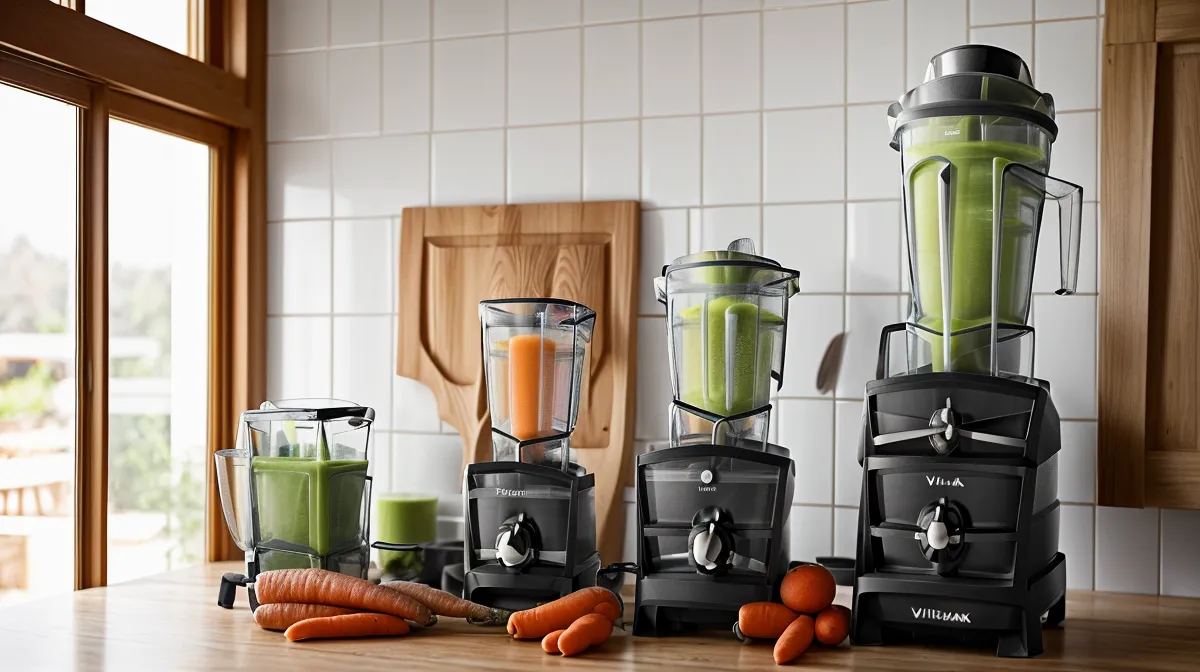
What actually separates a high-performance blender you keep using for years from one that gets quietly replaced before the receipt fades? That question sat with me longer than it should have, mostly because I answered it wrong twice already before landing on a Vitamix.
Quick disclosure before any of that: some of the product links below, including the ones to a Vitamix or a KitchenAid, are affiliate tracking links, and if you buy through one after clicking, I earn a small commission at no extra cost to you. Only gear that survives real testing in my kitchen makes it onto this page.
Does a $700 Blender Replace the Stovetop for Soup?
Here's the answer, up front: yes, if you actually use it for the heavy stuff, and the heavy stuff for me is soup. I tried out a floor-model Vitamix Ascent at Sur La Table on State Street before ordering my own, mostly to check whether the container would even clear my cabinets — these machines run tall, tall enough to push past standard 18-inch upper cabinet clearance, and you end up tipping the container forward just to lift it out.
Raw carrots, a knob of ginger, a splash of stock, six minutes on high. That's the whole method for soup-making — the blades spin fast enough that friction does the cooking, and the container comes off the base somewhere around 170 degrees. No pot, no stovetop, nothing to scrub afterward, which is the whole pitch for high-performance blending if you're skeptical it's worth the price.
The Nut Butter Motor Paradox
Nut butter is where the industry logic runs backward. Most reviews push you toward the priciest, highest-torque model on the shelf for something like almond or peanut butter, and in my experience that's often the wrong call — the more powerful motors trip their own thermal protection sooner, because a thick, dry load makes them work harder and heat up faster.
A wide-base container keeps a better vortex going, pulling ingredients back down into the blades instead of leaving them stuck in a dry clump at the top, which is exactly why my Vitamix Editor's Pick still handles a Sunday batch of peanut butter better than newer, smarter models that keep pausing to protect themselves. The tamper that comes with it — a plastic rod you push down through the lid while the motor is running — is the actual reason it works, not some marketing footnote. Weight matters here too, the same way it matters with a KitchenAid Pro 5 Plus: that mixer carries 25 pounds specifically so it doesn't walk across the counter under a stiff dough, and the Vitamix leans on suction feet and a heavy base to do the same job while it's grinding something closer to gravel than butter.
There's a specific resistance in that KitchenAid's dial as it clicks through each speed setting under a floury thumb — a small mechanical honesty a touchscreen can't fake, and one more reason a stand mixer earns a permanent spot instead of getting stored in a cabinet.
Who Should Skip the Vitamix Entirely
None of this matters if your idea of a smoothie is milk and a ripe banana — a cheap stick blender handles that fine, and dropping $700 on a Vitamix for that job alone is a waste of money. Hot soups and nut butters are the exact use cases that separate a Vitamix buyer from a bargain-blender buyer — if neither shows up in your kitchen weekly, the math changes.
My neighbor Marlo showed up on the porch last month with exactly this question, except about the blender instead of a pan — she'll spend real money on a mid-range model without blinking, but wanted an actual argument for paying quite a bit more before going higher. The honest argument is the same one I'd make about All-Clad: you're paying for a machine that doesn't quit on you in year three, not for it to feel nicer in year one, the same way tri-ply construction is really a thermal-control story more than a shine story. That's the price-performance gap that shows up whenever someone compares a real pan to a cheap stamped clone — identical on a shelf, nothing alike after a hundred uses.
I've made the cheap-first mistake in other drawers of the kitchen too. A no-name chef's knife from Amazon felt plenty sharp out of the box and went dull on my second onion, which taught me that edge retention matters more than the initial edge — a lesson from a different category entirely, but the same underlying math as the blender.
Building Out the Rest of the Kitchen Around It
One caveat for the sourdough crowd: a Vitamix can pulse grain into something resembling flour, but it's not a mill, and it's not what develops the dough either — that job still belongs to a stand mixer, which is why I keep reaching for the KitchenAid for heavy doughs. Dough development is really its own separate skill from blending, and stretching the Vitamix into that role just to save counter space is a false economy (the same way a baking mat's surface conduction is a completely different argument from whatever pan the loaf actually bakes in). For actual oblong loaves, a dedicated cast iron vessel like the Challenger Breadware does a job neither the blender nor the mixer can touch, and at nearly twenty-two pounds for the pair of pieces, it's clearly built for a different job than either one.
Is This Worth It If You Don't Cook Every Day?
Frozen spinach and a rock-hard bag of frozen mango on a gray morning is the real test, not a demo in a showroom (my container lid still carries a hairline crack from sliding off a shelf during a move, and it still seals fine). Ramp it to the top speed, let it run for well under a minute, and there is no stalling, no burning smell, no rescuing anything with a butter knife. That's the whole case for a Vitamix in one sentence: it does not care what day it is or how tired you are, it just does the job.
It reminds me of a specific afternoon when a probe alarm went off in the living room while a pork shoulder held at 195 degrees in the other room, and the oven door never had to open once to check. Doneness-temperature-precision is its own subject entirely with a wireless meat thermometer, worth exploring separately, but the underlying relief is the same one the blender gives me: a tool that works without supervision is worth more than one that just works.
Container size plays a bigger role than most buyers expect, too — a half batch rattling around in a container built for a full one blends worse than either extreme, which comes down to container-batch-matching more than raw power.
The Short Answer for Most Kitchens
So, the direct answer: if soup and nut butter, or anything else that currently takes muscle, a stovetop, or twenty minutes of babysitting, show up in your kitchen weekly, the Vitamix earns its price over a couple of years the same way the All-Clad set already has. If your blender's job is an occasional smoothie, skip it and keep the difference for something else — a bargain machine handles that one task fine, the same way an inexpensive spatula is perfectly adequate until its coating gives out against a screaming-hot pan and you finally understand why the pricier one exists. Either way, you won't be tipping a container out from under a cabinet every morning for a machine that mostly sits there bored.
For more on how it holds up past the honeymoon period, I've written separately about the daily tax of owning a high-end blender after years of actual use rather than a first-month impression, and if a stand mixer is next on your list, the KitchenAid attachments worth owning are a separate rabbit hole — the pasta roller alone is the whole argument for buying into an attachment ecosystem in the first place.