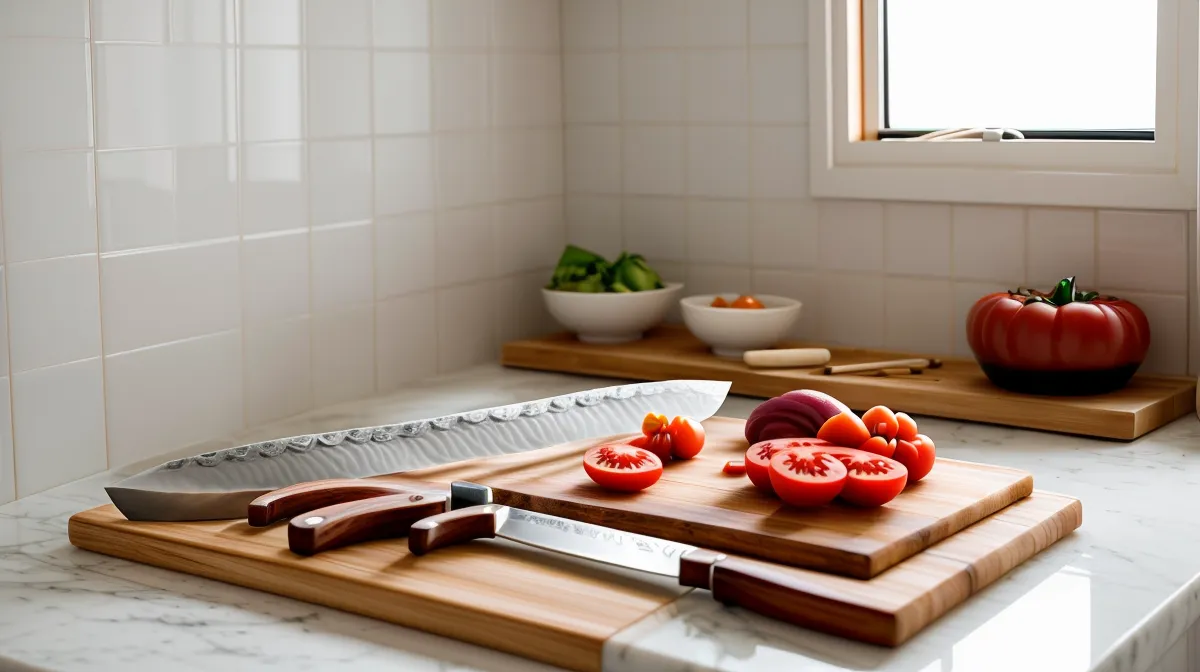
Fifteen degrees. That's the sharpening angle stamped into most premium Japanese blades, including Shun and Global, and missing it by even a couple of degrees is how my knife drawer turned into a graveyard of expensive, dull steel. On a Saturday morning I tried to cut into a beefsteak tomato from Willy Street Co-op with my Shun chef's knife, and the blade skated across the skin instead of biting into it. Every other kitchen tool in my house, including the Vitamix, the All-Clad, and the KitchenAid Pro 5 Plus, gets tested, tweaked, and replaced the moment it stops earning its keep. Knife maintenance was the one corner of home cooking I'd been quietly ignoring, and a decent knife sharpener had never once made it onto my counter, let alone earned an honest review from me.
The common wisdom about premium steel says you need the harshest, highest-grit sharpening system you can justify buying: diamond plates, an aggressive motor, whatever removes the most metal fastest. That advice is backwards for most home cooks, and it took two expensive detours before I understood why.
The Fifteen-Degree Problem With Premium Steel
My first attempt at a fix was a set of dual-grit Japanese water stones, bought after enough tutorials to feel dangerous. Holding a consistent angle turned out to be the hard part, not the sharpening motion itself. One slip on my Wüsthof left a jagged scratch across the mirror-polished side of the blade, and at that point I wasn't sharpening the knife so much as damaging it. Steel at that hardness, around 60 on the Rockwell C scale, holds an edge well, but it's brittle enough that the wrong angle doesn't just dull it. It chips it.
Why the Aggressive Electric Sharpener Missed the Point
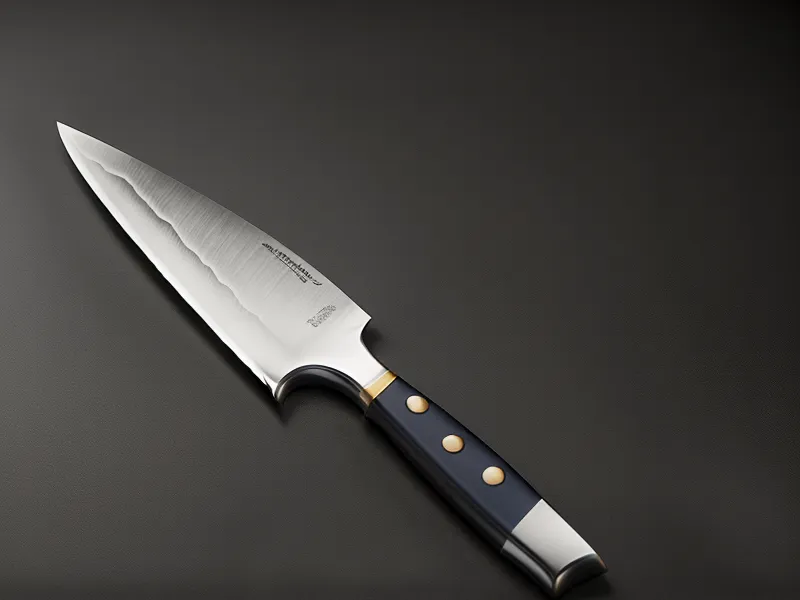
Next came an electric sharpener that sounded like a small table saw every time I switched it on. Running an old Henckels through it on a Wednesday afternoon told me everything I needed to know: it worked, technically, but it left a coarse, toothy edge that felt closer to a lawnmower blade than a chef's knife. Not exactly what a 15-degree Japanese profile is built for (I returned it before the window closed, and I'm still not entirely over the noise it made).
Two failures. A drawer of dull, expensive knives, one scratched Wüsthof, and nothing to show for either attempt except a return receipt.
What Actually Solved My Knife Maintenance Problem
What worked was different from both of those: a magnetic, angle-guided rolling system that locks the blade in place instead of asking my hand to hold a steady line. Set the base to 20 degrees for Western knives like the Wüsthof, or 15 for Japanese steel like the Shun, then roll a diamond disc along the stationary edge. My hand stopped being the variable. The first pass over my dull Shun felt like a gritty little vibration through my palm, nothing like the grinding of the electric machine, and for the first time the angle wasn't something I had to guess at.
A friend of mine spends her weekends restoring mid-century modern furniture in her garage, sanding and refinishing with a patience I've never had for slow, careful crafts, which is roughly the temperament a whetstone rewards. A guided rolling system rewards a different temperament: the one that wants the tool to hold the angle so I don't have to.
I spent one Sunday afternoon working through every blade in my magnetic knife holder, from the heavy Wüsthof set at 20 degrees down to the paring knives, and the whole process felt like maintenance, not a rescue mission.
Is More Grit Always Better? Not for 60 HRC Steel
Here's the part most generic guides skip: more aggressive isn't automatically better once you're working with steel this hard. Diamond is harder than the steel itself, and pressing a coarse diamond disc into a 60 HRC edge too often creates tiny serrations that accelerate wear instead of preventing it. The fix isn't a bigger tool. It's a lighter hand: the weight of the roller alone is enough pressure, and running the diamond disc every few months instead of every week, with a ceramic honing rod doing the routine work in between, keeps the edge polished without thinning the blade.
Edge maintenance, in other words, is mostly honing, not sharpening. Daily cutting on a wood board rolls the edge over rather than grinding the metal away, so most of what a knife needs on any given Tuesday is a few strokes on a honing rod, not a fresh trip through an abrasive system of any kind. Save the actual sharpening for when honing stops bringing the edge back, which for a knife in regular use is closer to a seasonal task than a weekly one.
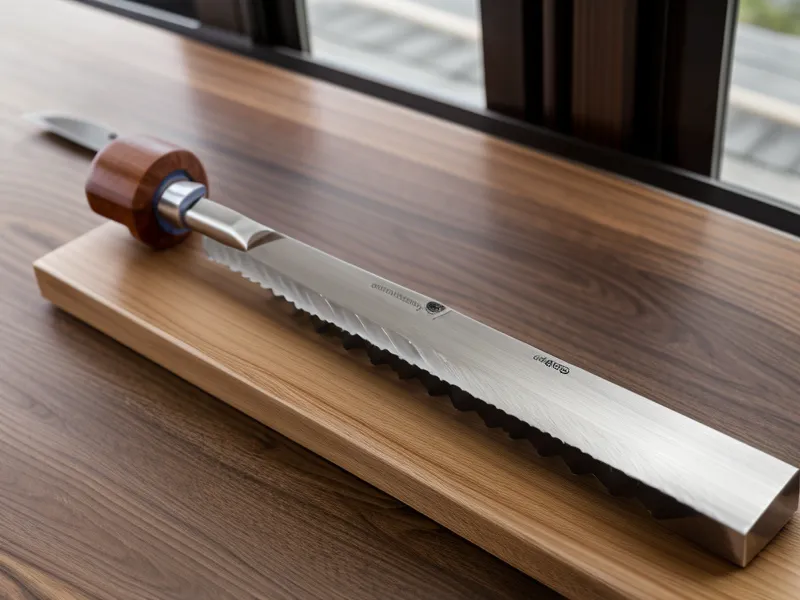
The cutting surface matters almost as much as the sharpening system. Anything harder than wood, such as stone, glass, or the edge of a ceramic plate, undoes a careful sharpening job in a single pass, so a properly maintained edge and a hard countertop don't really coexist. A dedicated wood board earns its keep here in a way most kitchen gadgets never do.
Who Should Buy a Guided Sharpener, and Who Shouldn't
If you own a set of Shun, Wüsthof, or one of the newer direct-to-consumer knives from Misen or Made In, a guided rolling system closes the gap between a dangerous cheap pull-through and a whetstone that punishes any hand that isn't rock steady. It's built for someone who wants their knives performing at the level they paid for, without training for years to get there.
Skip it if you're mostly cutting with twenty-dollar knives from a big-box store. That's not a knife maintenance problem worth solving with a dedicated system; it's a knife worth replacing every few years instead. And if you're a genuine traditionalist who finds the ritual of soaking stones and hunting for the angle by feel satisfying in its own right, a guided system will feel over-automated. It trades romance for consistency, which is a fair trade for most home cooks, just maybe not for you.
I've made worse bets than this one. A T-fal nonstick set that warped on my gas burner by month four taught me that a price tag alone tells you nothing about whether a tool is right for your kitchen. The same logic applies here: the price-performance gap between a cheap pull-through and a guided system is real, but whether it's worth closing depends on how often you actually cook, not how much you spent on the knives themselves. A hobbyist who cooks a few nights a week gets plenty from honing alone; someone at the cutting board daily will feel the difference in edge retention within the first few weeks.
Trusting a verdict like this only comes after living with a tool through its boring stretch, the same way I wouldn't call a blender or a stand mixer worth the upgrade after one good smoothie. There's a particular, quiet satisfaction in gear that just works without announcing itself. That's the same feeling I got the night a probe alarm went off in my living room because a pork shoulder had cleared 195 degrees without me ever cracking the smoker door to check on it. No drama, just proof the thing did its job.
Last Tuesday, prepping a mountain of onions for a Sunday roast, the same Shun that had failed the tomato test went through every layer without dragging or tearing. Afterward I reached for my silicone spatulas to scrape the board clean, and it was such an unremarkable, ordinary moment that I almost missed how different it felt from that first Saturday.
The point isn't that everyone needs a guided sharpening system, or that whetstones are wrong, or that diamond grit is the enemy. It's that matching the tool to your own patience, and to the knives you actually own, matters more than chasing whatever sounds most aggressive. Respect the angle stamped into your blade, lean on a honing rod more than you sharpen, and stop assuming that an expensive knife stays sharp on its own.