Twenty minutes. That's the real time from a bag of flour on the counter to fettuccine hitting boiling water once a KitchenAid Pro 5 Plus is set up with its pasta attachments — a number that sounds inflated until you've actually timed it. Homemade pasta making has a reputation for eating an entire Sunday afternoon, and for plenty of home cooks it still does, but the gap between a stand mixer with the right attachments and one without them is exactly where that reputation stops being accurate. This is a breakdown of which pieces of premium kitchenware actually earn a spot on the power hub, which ones don't, and where the KitchenAid stops being enough on its own and a Vitamix or an All-Clad pan has to finish the job.
A quick disclosure before any of that: most brand links on this page run through affiliate tracking, and if a Vitamix, KitchenAid, or All-Clad purchase happens after a click, I earn a commission at no extra cost to the buyer. Nothing gets linked here unless it's spent real time on my stove or counter — including a couple of pieces that didn't survive the testing.
The KitchenAid Power Hub Ties Every Attachment Together
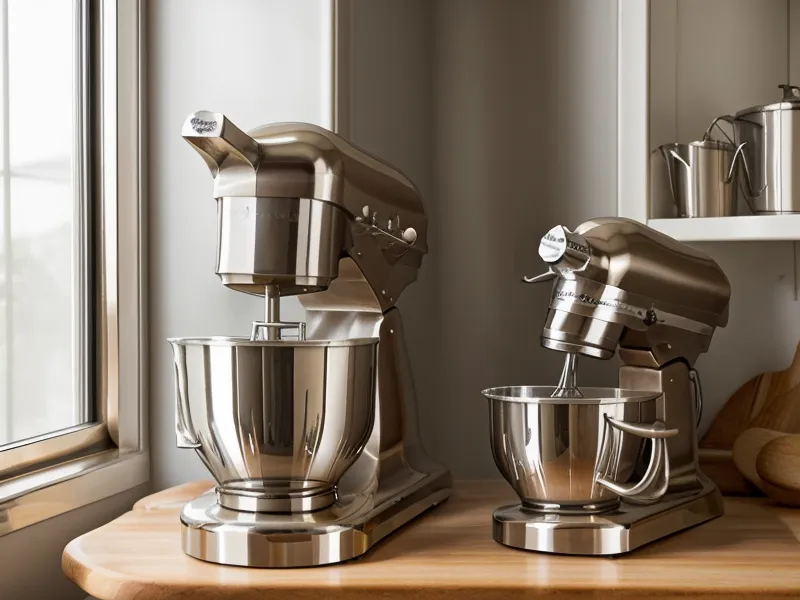
Every attachment in the KitchenAid pasta lineup — roller, cutter, meat grinder, ice cream bowl — connects to the same power hub on the front of the machine, and that hub is the real engineering story here, not the shape of any individual attachment. It hasn't changed meaningfully in decades, which is why a stainless roller bought new today still fits a machine built years earlier. What changes the outcome is torque. A stiff, low-hydration semolina dough sitting around 30 percent water fights a weak motor, and I found that out the expensive way with a Hamilton Beach stand mixer that overheated and tripped its motor protector halfway through an hour-long sourdough knead one Saturday. That machine wasn't underbuilt for cookies or box-mix batters. It just wasn't built for dough that dense, and pasta dough asks for the same kind of stability. At 25 pounds, the bowl-lift Pro 5 Plus doesn't rock or creep across the counter under that load the way a lighter tilt-head model can.
Whether that torque matters to you personally depends on how the mixer actually gets used week to week — someone baking bread every weekend needs the bowl-lift's power for a different reason than someone making pasta twice a month, and I've laid out that decision in more detail elsewhere for anyone comparing the premium models directly. (For what it's worth, the dough hook itself is a separate question — I still bring a stiff dough together by hand until it's a shaggy ball before the hook ever touches it, since even a low speed setting generates enough friction heat to work against a dough this dry.)
Setting Up the Roller and Cutter Set
Thick to thin, six clicks apart. Setting two or three flattens the dough enough to fold and pass through again, and by the time the dial reaches six, the sheet is thin enough to see the wood grain of the counter through it — a physical checkpoint that beats guessing by feel. Fettuccine and tagliatelle cutters attach to the same hub afterward, and the full sequence — roll, rest, cut — is what gets a batch of noodles onto the counter inside that twenty-minute window.
Cheaper roller sets exist, and they look nearly identical in product photos. The internal gears are where they fall apart, sometimes literally, skipping teeth once the dough gets cold or slightly overworked. A genuine KitchenAid roller and cutter set holds resale value the way few kitchen gadgets do, which puts it closer to a durable tool than a novelty attachment. None of that matters much for someone making pasta twice a year, though. A manual hand-cranked roller does the job fine at that frequency, and the case for the KitchenAid attachments only holds up once fresh pasta turns into a regular Wednesday-night habit instead of a special occasion.
Should You Mix Dough by Hand Before the Hook?
Yes, for anything stiffer than a standard bread dough — that's the short version, and it's worth explaining why. The dough hook is efficient once dough has come together, but starting a low-hydration dough straight on the hook tends to overwork the outside of the ball before the inside catches up, and the motor's friction adds heat exactly where pasta dough doesn't want it. Bringing the dough to a rough, shaggy stage by hand first, then letting it rest a few minutes before the hook finishes the job, produces a more even texture than starting the mixer cold. It's a small extra step, maybe two minutes, and it avoids a dough that fights the roller later.
Building the Sauce: From Vitamix to Simmer
Pasta night doesn't stop at the noodles, and on a Sunday when the afternoon plan is a walk at Olbrich Botanical Gardens before dinner, the sauce side of the counter usually has a Vitamix Ascent running well before the water boils. I use it for marinara and roasted red pepper sauce, mostly because the variable-speed dial does something most blender buttons don't: the low end emulsifies a vodka sauce without whipping in enough air to turn it pale and frothy, and the high end pulverizes ice or breaks down a hot soup without protest.
Container size ends up mattering more than most people expect before they own one — a half-batch of sauce in a full-size container blends unevenly, catching air pockets instead of pulling everything into the blade, and matching the batch to the container is its own small skill that a different piece on this site covers in more depth. What convinced me the Ascent was worth the upgrade wasn't a single afternoon, though. It was watching a friend from Madison's community kitchen co-op, Brennan Strickland, run his salvaged commercial Vitamix at a volume I never will, and hearing which parts hold up under that kind of daily abuse versus which parts are fine for someone blending sauce once a week.
None of that means the blender is required equipment for a good sauce, and it's worth being honest about who should skip it. A meat ragu that simmers for hours doesn't need a blender at all — the only tool that matters there is something to judge when the meat itself is actually done, which is a different piece of gear and a different article entirely. If a smooth tomato or pepper sauce happens weekly, the Vitamix earns its keep; if it's an occasional Sunday project, a food mill or even a good potato masher gets most of the way there for a fraction of the cost.
Finishing the Pasta in the Right Pan
Where the noodles and sauce actually meet is a pan, not the pot, and that's the step that gets skipped most often at home. I use an All-Clad D3 12-inch fry pan to finish pasta with a splash of starchy cooking water, tossing everything together off direct heat so the sauce clings instead of pooling. Tri-ply construction spreads heat across the whole pan instead of concentrating it over the disk at the bottom, which sounds minor until a budget clone scorches sauce in the corners while the center stays lukewarm. The last batch of onions I caramelized in the D3 rolled edge to edge with the same color the whole way across, no single spot catching early and burning while the rest waited its turn.
That kind of even heat is a bigger topic than one pan, and a full comparison of thermal control across premium cookware brands lives elsewhere on this site. The short version for pasta purposes is that uneven heat is the enemy of a sauce that's supposed to coat rather than break. The gap between a real All-Clad piece and a budget lookalike is real, though not always as wide as the price tag suggests, and a separate piece walks through the stainless alternatives that actually hold up. A silicone spatula that can sit in a hot pan without softening earns its keep here too, mostly for stirring down a reducing sauce without babysitting it, and a knife that holds an edge through a few onions and a head of garlic without a mid-prep touch-up matters more than people expect on a night with three pans going at once. Handles on the D3 get hot enough that a side towel becomes part of the routine — Joel, who ends up hand-washing most of this, has strong opinions about which pans are worth the extra care and which aren't — and keeping the pan looking like more than a hand-me-down mostly comes down to Bar Keepers Friend and low expectations of perfection between uses.
Ragu is really the exception to all of this, since a sauce that simmers for four hours needs steady, retained heat more than it needs tri-ply responsiveness. For that job I've been reaching for a Magnifique Claypot Oven instead of stainless — the kaolin clay holds moisture in a way that keeps meat tender through a long simmer, and at around $150 it's a more accessible way into that kind of slow braising than a $400 Dutch oven. It isn't induction-compatible, so anyone who's already switched their stovetop over should skip it regardless of how good the clay performs.
Who Should Actually Buy This Setup?
Someone who treats a big Sunday meal as a weekly project — pasta one week, a slow braise or a loaf of sourdough the next — gets real, repeated value out of the whole stack: the Pro 5 Plus for the dough and attachments, a blender for the sauce, a pan built to heat evenly. That's a specific kind of cook, though, not a general recommendation. Someone whose idea of dinner is a jarred sauce and ten minutes of boiling water doesn't need any of it, and buying the attachment set on the hope that it'll turn them into that other kind of cook usually just adds clutter to a drawer.
What separates the two groups isn't income, in my experience. It's whether the process itself is part of the appeal. People who care whether a sauce is properly emulsified, or whether a dough sheet is thin enough to see through, tend to keep this gear in weekly rotation long enough for it to earn its keep in a way a spec sheet can't capture. People who don't care about that distinction are better off with an inexpensive hand-crank roller and a decent nonstick pan, and there's no shame in that setup either. It's just a different relationship to cooking, not a lesser one.
Not everything here is required to eat well on a Tuesday, and it's worth saying that plainly before the last recommendation. But for the cook who already has a stand mixer taking up counter space and keeps circling back to the idea of fresh pasta, the KitchenAid Pro 5 Plus with the roller and cutter attachments is the piece of the stack that turns a Wednesday dinner into something closer to an occasion, without actually adding much time to the night.