The motor's pitch drops half a step the second the blades stop spinning around the almond butter and actually catch it. That shift, not a timer, is how I know the vortex has locked on. Almost six hundred days into owning this Vitamix Ascent, that small sound still makes most of the argument by itself. Premium kitchenware only proves itself under real long-term testing, not a first impression in someone's kitchen showroom.
Quick disclosure before any of that: several of the product links here, including the one above, are affiliate links, and I earn a small commission if you buy through them. Nothing gets recommended on this site unless it has lived on my counter long enough to show where the finish actually wears — and this one has worn plenty.
What Long-Term Testing With Premium Kitchenware Actually Corrects
Every gear review repeats some version of the same myth eventually: spend enough money and the tool stops being something you can break. My friend Audrey Cantwell, a landscape architect who's seen enough of my kitchen experiments to be skeptical of most of them, asked me flat-out this summer whether the Vitamix was actually worth what I paid, or whether I just couldn't admit I'd already been wrong twice. Fair question, and she wouldn't let me hedge on it.
The honest answer starts at the produce stalls of the Dane County Farmers' Market at Capitol Square, where I buy the same variety of mango every August and freeze it myself for breakfasts. For two summers, a Cuisinart hand blender was what turned that frozen mango into a smoothie, and it stalled out completely, every single time, the moment frozen fruit hit the blades. I assumed that resistance was just what blending frozen fruit felt like. It wasn't. It was an underpowered motor pretending to be a kitchen tool, and no amount of technique on my end was going to fix that.
Six years into treating kitchen gear as something worth testing properly instead of just buying and hoping, the pattern holds. I'd spent nearly five hundred dollars across three different mid-tier blenders that didn't survive a single Wisconsin winter of frozen-fruit mornings, before I finally bought the Ascent outright for close to the same amount. At $0.91 a day over six hundred days, that math holds up fine. But the real myth here isn't that a $500 blender is a status symbol — it's the opposite one nobody bothers correcting, the idea that once you've spent the money, the tool becomes foolproof. It doesn't. Price buys durability under normal use. It buys almost nothing against skipped instructions.
Cleaning It the Way Vitamix Actually Tells You To
Vitamix designs the Ascent for in-place cleaning: a drop of dish soap, warm water, and thirty to sixty seconds on the highest speed setting, no disassembling the blade housing, ever. That instruction, I ignored exactly once. Early on, after blending a reduction that had raw chicken stock in it (the kind of moment that calls for an oven mitt and a raised eyebrow), I panicked about bacteria and rinsed the container with a bleach solution instead of just running the machine's own cleaning cycle. Within a few uses, the clear plastic had gone faintly cloudy, etched in a fine haze I still notice under the kitchen light two years later.
The container still works fine. It just doesn't look new anymore, and it never will again, because I overrode a method that was already engineered to solve the exact problem I was trying to solve myself.
Does the Torque Actually Matter, or Is That Marketing Too?
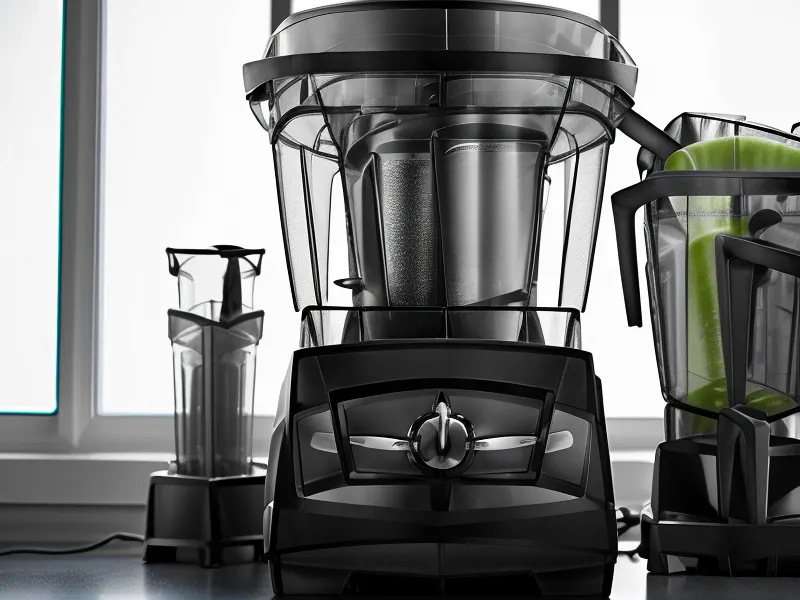
Here's the physics most blender reviews skip entirely. Cheaper blenders rely on blade sharpness to cut through food, and a sharp edge dulls fast under daily use. The Ascent's blades are actually blunt by comparison. The machine pulverizes through raw torque and speed, not a fresh edge. That's why a full tray of ice turns to snow in about ten seconds flat, and it's why the low hum through my butcher-block island shifts into something you feel in your sternum once the dial passes speed four. Building a stable emulsion for a vinaigrette that won't separate by lunch needs that same torque behind it; a machine that just spins fast without power can't hold the mixture together the same way. It's part of why the Ascent stays ahead of the KitchenAid Pro 5 Plus for anything liquid-based, even though the KitchenAid remains what I reach for once dough is involved instead of soup.
The dial itself isn't cosmetic, for what it's worth. Speed one folds herbs in without pureeing them. Speed ten turns raw vegetables into hot soup through friction alone. After six hundred days, the metal drive coupling where the motor meets the blade still looks close to the way it did out of the box — no cracking, no play in the connection, which is exactly the part that fails first on the plastic-coupling blenders still sitting in my basement.
Picking the right container size matters here too. I run the larger container for soups and a smaller one for single smoothies, and matching batch size to container is its own small skill — I've written about it separately in my guide to the Best Vitamix Blenders for Making Hot Soups and Nut Butters, so I won't repeat all of it here.
The KitchenAid isn't immune to its own version of this mistake, for what it's worth. I once pushed a stiff bagel dough through the Pro 5 Plus at a speed the manual doesn't really recommend for that hydration level, and I felt the gears slip before I heard anything — a grinding hesitation instead of a clean catch. Nothing broke, but it was a clear signal that dough development has limits tied to the machine, not just the recipe, and that matching mixer model to how someone actually bakes matters as much as matching blender to how they actually blend.
Cabinet Clearance Nobody Puts on a Spec Sheet
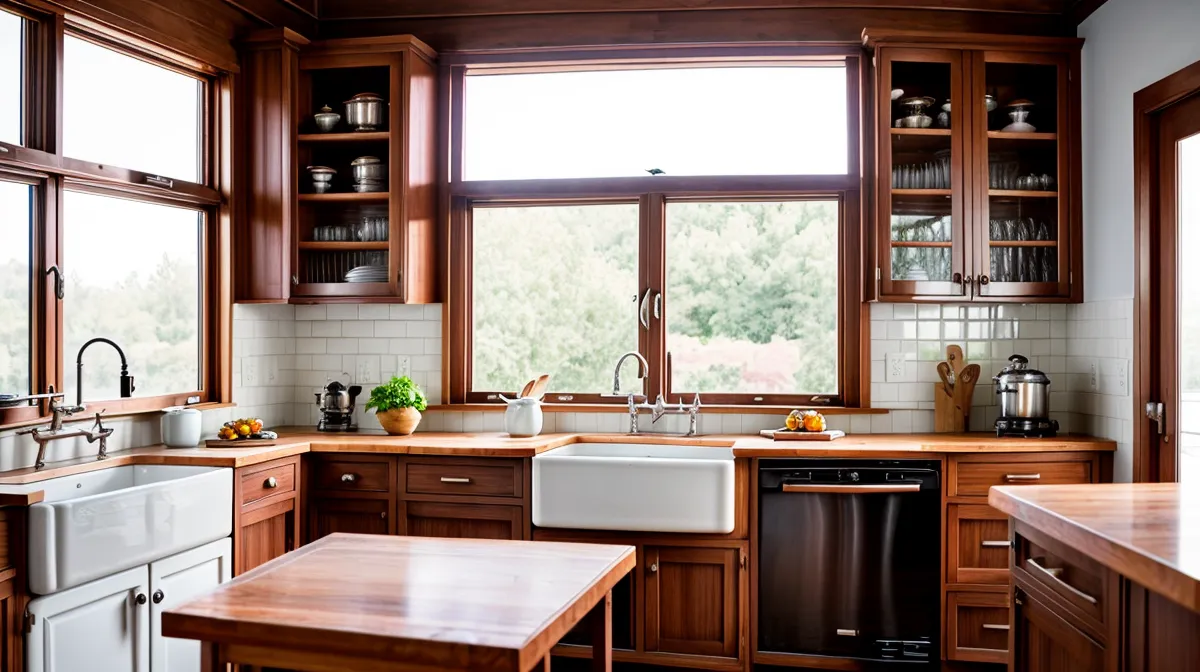
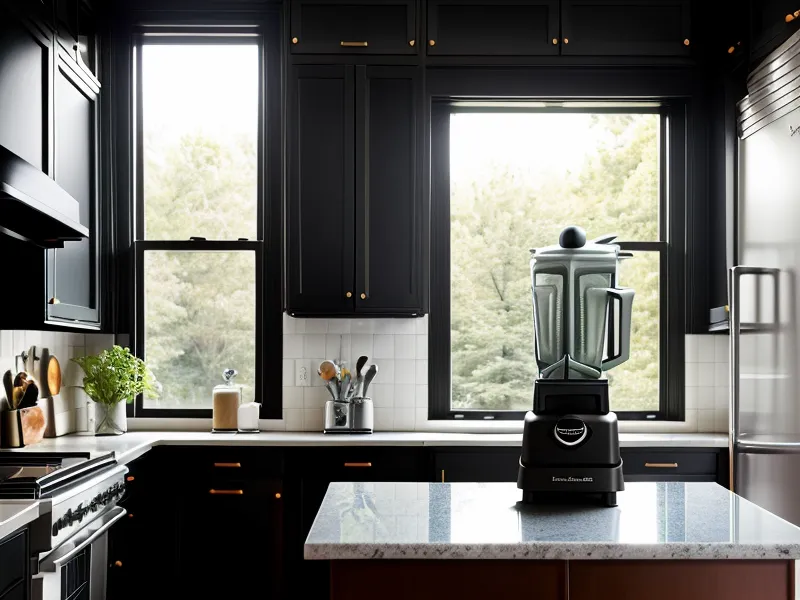
My galley kitchen, in a 1920s Craftsman on Madison's west side, only allows so much. A window that faces north keeps the light steady through the day, but it adds no height to the upper cabinets, which sit right around eighteen inches above the counter. The Ascent container clears that by less than an inch. Rushing to free up counter space for a deadline last spring, I tried to slide the whole container back under the cabinet with the lid still on and caught the edge of the original trim, chipping a small flake of paint that's still there.
Not dramatic. Just a small, repeated friction. The container lives forward of the cabinet line now, next to the KitchenAid, which means tipping it toward me every time just to get the lid off. Minor on any single morning. Months of that same minor friction start to feel like something worth mentioning in a review nobody else seems to write.
The Price Tag Earns Out Less Often Than People Assume
The pot rack over my butcher-block island holds the full All-Clad lineup at this point, and I've run the same cost math on that set that I ran on the blender: a steep price tag spread across years of near-daily dinners, and whether it ever stops feeling steep. Sometimes it doesn't. Distracted by a phone call once, I scorched an empty All-Clad fry pan badly enough that a faint blue-gold discoloration set into the stainless permanently. It's cosmetic, not structural — the tri-ply construction still heats evenly edge to edge — but it's a visible reminder that even cookware built for consistent thermal control doesn't forgive an empty pan left on high heat.
My silicone spatulas took a similar hit the same year. I'd gotten in the habit of resting the head against the rim of a hot sauté pan between stirs, and after months of that the silicone had softened and warped just enough that it no longer sat flat on the counter. Neither mistake was the gear's fault. Both were mine, and no amount of premium pricing changes that particular math.
Understanding What the Tamper Is Actually For
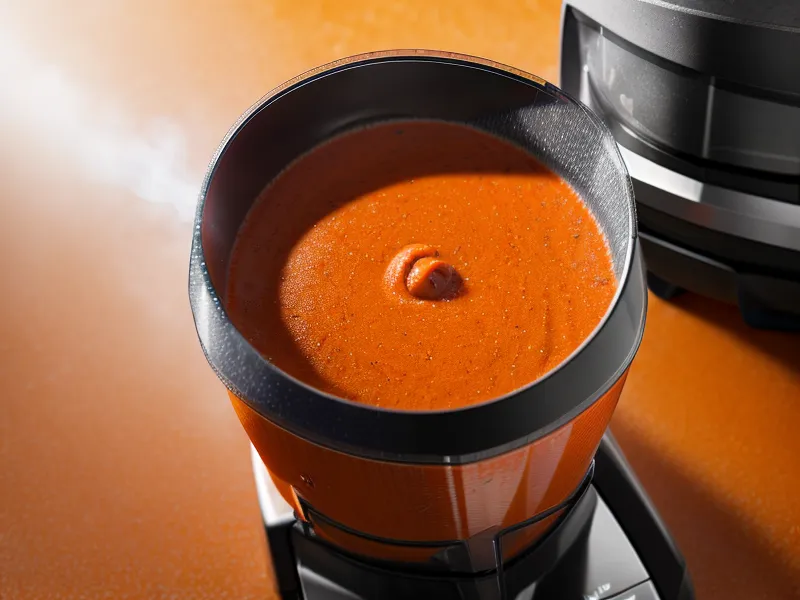
I assumed for a long time that the plastic tamper was a design shortcut, evidence the blade design couldn't fully do its job on its own. Then came a thick roasted red pepper soup made without extra liquid, the kind that in a cheaper blender just spins the blades inside an air pocket — cavitation, technically — while the food sitting above never actually reaches them. With the Vitamix, pushing the tamper down manually keeps everything cycling back into the vortex instead of stalling above it. A separate morning, making a plain banana smoothie, I looked down mid-blend and realized the frozen banana had already gone from solid chunks to a completely even purée without the container so much as shifting on the counter — no shake, no walking, nothing left to correct. That's the tamper doing its quiet job even on mornings I'm not using it: the whole container geometry is built around it.
Who Should Actually Pay the Premium?
So, the answer to Audrey's question: yes, full price, again, without hesitating. That's not a hedge, it's a verdict, and straight verdicts are the whole point of testing gear this long instead of writing about it after a week. If you blend a protein shake once a week, none of this argument is really for you — buy something modest and stop thinking about it. But if you blend daily, if frozen fruit and homemade nut milk are part of an actual routine rather than an aspiration, and if you're willing to run the machine's own cleaning cycle instead of improvising with bleach the way I once did, the Vitamix Ascent earns every one of the six hundred days it's logged in this kitchen.
It's the same standard I hold the rest of my gear to. I'd rather learn how to actually clean All-Clad pans properly than replace cheap nonstick ones every eighteen months, and I'd rather admit when I've etched a container or scorched a pan than pretend a premium price tag makes me incapable of it. The myth was never that expensive blenders are status symbols for people who photograph their smoothies. It's that spending the money means you get to stop paying attention. You don't. You just end up with a machine actually built to survive you paying attention imperfectly — which, six hundred days and $0.91 a day in, is still the clearest tax I've ever been glad to pay.