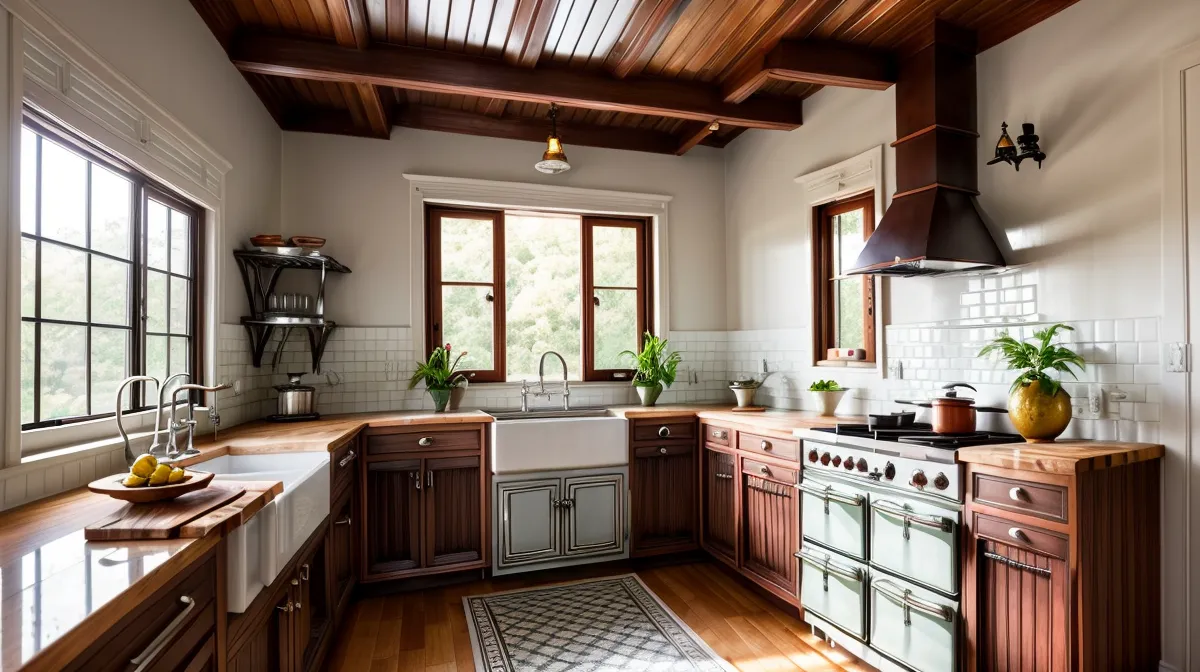
Flour is drifting off the butcher-block island again, settling into the nicks and pale flour ghosts worked into that surface over the years, and I'm doing the math on how much of my last quarter-cup made it into the bowl versus onto the floor. This is the exact kind of precision baking problem a stand mixer accessory is supposed to solve, which is why I finally gave in and bought the KitchenAid sifter and scale attachment — one more piece of baking gear crowding the pot rack over my head, in theory closing the gap between weighing flour and actually getting it into the bowl.
Copy editing pays my bills, and the same attention that makes a misplaced comma jump off the page is what makes a few missing grams of flour feel like a small emergency. For years, even with a KitchenAid Pro 5 Plus doing the heavy lifting, the routine was two separate tools handling two separate jobs — a digital scale on the counter, a hand-crank sifter over the bowl — and the transfer between them cost me flour every single time. In the world of a good tray of macarons, where a shell either has feet or it doesn't, that transfer loss is the difference between success and a very expensive batch of almond-flavored crackers.
The Precision Gap Between Weighing and Sifting
Most people underestimate how much flour density can shift with humidity — the standard variance can run as high as 25 percent, meaning a scooped cup might hold 120 grams on a dry day and 150 on a damp one here in Madison. Weighing in grams solves that problem. Sifting solves a different one, and treating them as one motion instead of two is the entire premise behind this attachment.
The attachment locks onto KitchenAid's universal power hub, a design the brand has kept consistent across its whole attachment ecosystem for decades — the same hub that runs my pasta roller and food processor — so nothing here feels destined to be obsolete in a few years. The hopper holds four cups of dry ingredients, enough for a standard loaf or a full batch of cupcakes, and once it's mounted, the whole process runs hands-free. The scale itself detaches and runs on two AAA batteries, so it doubles as a standalone kitchen scale; I use it to weigh chocolate chips or nuts on the counter without needing a second one taking up a drawer.
The Fixed Flow Rate: Control Tradeoffs
On a Wednesday morning, squeezing a quick sponge cake in before a deadline, the hands-free part earns its keep — I fill the hopper, set the scale, and go prep pans or answer email while it works. That kind of unattended reliability is what I actually look for in a stand mixer accessory: not novelty, just one less thing to babysit.
There's a low, steady hum while it works, flour raining down in an even mist rather than the uneven dumps I used to get from a hand-crank sifter, and it reminds me of the exact feeling I got the first time I watched onions slide edge to edge across my All-Clad skillet without ever hitting a hot spot — that click of recognizing a tool is actually built for the job instead of just being expensive. By the time a heavy sourdough stretch rolled around, the aeration was noticeably better than anything I'd gotten by hand, which matters once you're chasing an airy crumb instead of a dense one.
Four months in, though. That's when I started noticing where those 'pro' features might actually be a limitation for some bakers. The flow rate is fixed, which is great for consistency but removes any manual control — if you're the type of baker who wants to feel flour hitting batter and adjust your whisking speed in real time, this attachment does that thinking for you instead. It's a lab setup for a home kitchen, not a substitute for the judgment a hand sieve still asks for.
Precision claims on packaging don't always hold up under real use. I learned that lesson with an instant-read thermometer that had a six-second lag, the kind of delay that once had me pulling a pork loin off the grates at 137 degrees instead of the 145 it actually needed by the time the reading caught up. (Doneness temperature is its own rabbit hole, one I trust a dedicated thermometer to handle better than I ever could by feel.) This attachment doesn't have that lag problem — the reading is instant, since the scale sits right under the hopper — but it belongs to the same category of gear where the gap between the marketing claim and the real behavior only shows up after weeks of use, not on the first try.
This Attachment Earns Its Keep With Frequent Bakers
This is worth owning if you bake at least twice a week and you're already invested in the KitchenAid ecosystem — the kind of cook whose calendar has a standing slot for bread or cake, not the kind who bakes because a box mix was on sale. That's the same split that decides whether a premium stand mixer is worth the jump over an entry-level one in the first place: frequency, not enthusiasm, earns back the investment. Weighing, sifting, and mixing in one path also means fewer bowls in the sink afterward, which on a busy week matters more than it should. I used to say my KitchenAid food processor attachment was the only accessory that actually saved me real prep time; this one has become a close second. It doesn't change how the dough hook behaves once that flour lands in the bowl, either. Gluten development over a full knead is its own separate question, unrelated to how evenly the flour arrived there.
Brennan, a guy I know from the community kitchen co-op who runs a liquidated commercial Vitamix and is skeptical of premium kitchen spending on principle, asked me flat out whether this was worth it over just using two separate tools. My honest answer: only if the two-tool version is actually costing you enough flour and time to notice. That's the same price-to-performance question I ask about most upgrades in this kitchen — pans, mixers, blenders — where the gap between the mid-tier option and the premium one is real but not automatically worth closing for every cook.
The rest of the pot rack tells a similar story about tools proving themselves slowly instead of all at once. A chef's knife holds its edge through a full week of prep instead of just the first Tuesday, and you only notice once the cheap one goes dull; keeping that edge maintained afterward is a separate habit, more sharpening ritual than knife quality. A silicone spatula that can't handle real heat warps long before a sifter attachment ever pays for itself. Matching a blender container to what you're actually making — a single smoothie versus a full family batch — is the same kind of fit question as whether this attachment suits your baking schedule. Even the sheet pan under the batter plays a role: an uneven baking mat conducts heat inconsistently across the pan, and no amount of accurate sifting upstream fixes a cookie that baked unevenly downstream.
Skip This Stand Mixer Accessory If You Bake Twice a Year
Skip it if baking is an occasional, boxed-mix kind of activity for you, or if your kitchen doesn't have the cabinet space for a hopper-and-scale assembly that isn't small. It solves exactly one problem — the friction between weighing and sifting — and it solves it well, but it won't rescue a bad recipe or turn a once-a-year baker into someone who suddenly cares about crumb structure.
By about week twelve of using it regularly, the habit had fully replaced the old two-tool routine, and I stopped thinking of it as a separate step at all — it had just folded into how I bake. Joel, who has a reliable palate for finished food and zero interest in equipment specs, only noticed because the sink had fewer bowls in it; he doesn't care how flour gets into the bowl, just how the cake tastes coming out. The lesson that's stuck with me is less about this specific attachment and more about how I evaluate gear generally now: the tools worth keeping quietly remove a step you were doing badly, they don't add a feature you never asked for.
There's still a dent in my All-Clad lid from a chaotic Sunday pasta night years ago, a reminder that gear in this kitchen gets used hard, not admired from a shelf. The light through the window over my sink stays flat and even most of the day, which is probably why I notice unevenness in everything else so fast — dough, batter, flour falling into a bowl. This attachment isn't dramatic. It just keeps the flour on the scale instead of on the floor, which turns out to be exactly the kind of precision baking problem worth solving.