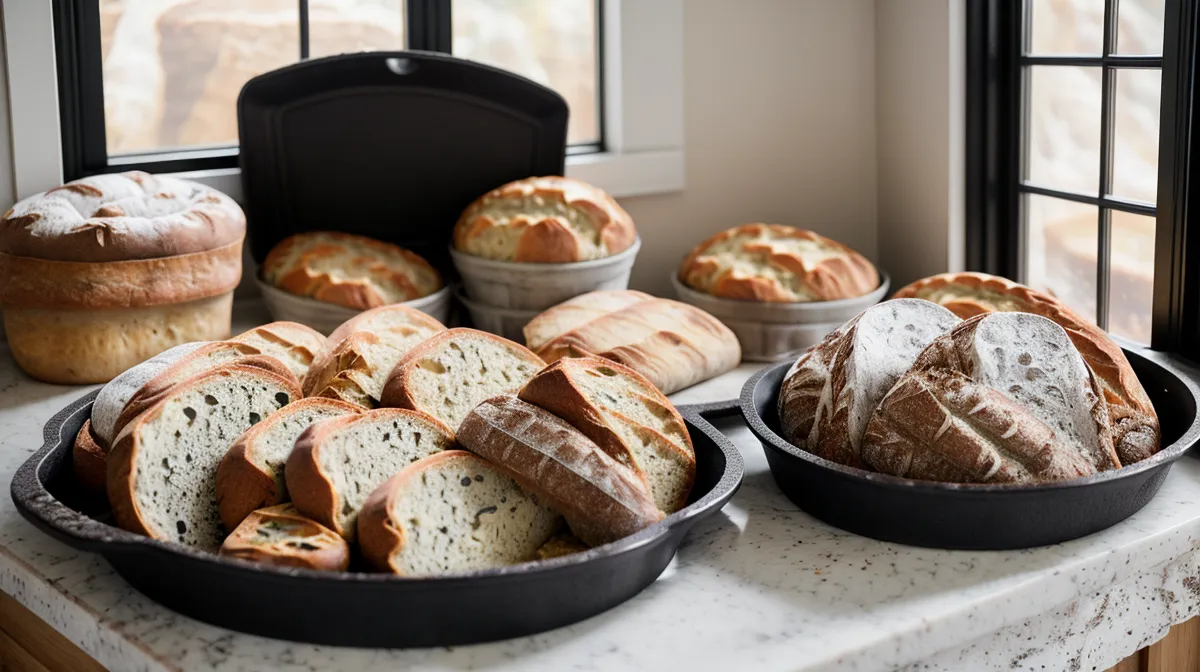
Both hands go under the handles, mitts already damp from the steam curling off the base, and the lid comes free in one motion before the crust underneath can pick up too much color. That's the real test of any bread pan for sourdough baking: not how it looks in a product photo, but how it feels when your arms are tired and the oven is holding at 500 degrees with twelve-plus pounds of cast iron between you and the loaf.
A verdict, before the mechanics: this pan is worth the money if you bake at least twice a week and don't mind the weight. It isn't if bread is an occasional weekend project. Whether it counts as a smart kitchen investment or an expensive shelf-filler depends entirely on how often it comes out of the cabinet.
Quick context on how I got here: my kitchen runs on a handful of brands I've bought, returned, and rebought enough times to trust — a Vitamix blender, a KitchenAid mixer, and enough All-Clad to fill the pot rack over my island. Some of the links below are affiliate links tied to those brands; if you buy after clicking, I get a small commission and you pay the same price either way.
The Shape That Makes This Cast-Iron Bread Pan Different
The Challenger Breadware looks nothing like the round Dutch ovens most sourdough bakers start with. The base is shallow, almost like a griddle, and the lid is a deep, heavy dome that drops straight down over the dough instead of swallowing it into a vertical well. That design solves the one real problem with a round pot: getting a wet, slack dough to land centered in a vessel preheated to 500 degrees without deflating it or scraping your knuckles on the rim.
Here's the number that matters before you buy one: the whole unit runs 21.9 pounds, and the lid alone accounts for 12.6 of that. Lifting a lid that heavy out of a hot oven mid-bake, just to vent steam, is a different motion than lifting a stockpot lid off the stove — it's a two-handed, braced-elbow lift, and doing it wrong is how people end up with a forearm burn on the upper element.
How the Seal Traps Steam, and Why the Footprint Matters
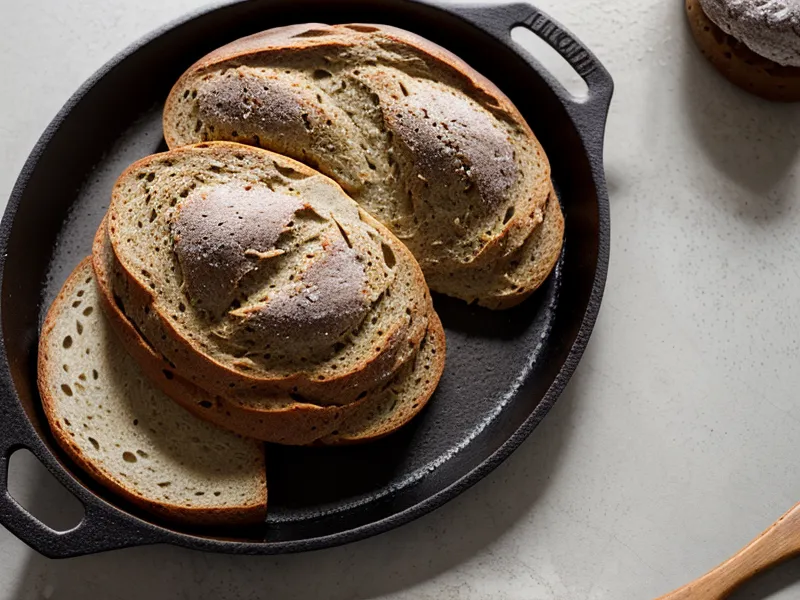
Steam is the whole reason to own a pan like this one. In the first several minutes of a bake, moisture rising off the dough needs to stay trapped against the crust, or the surface sets too fast and the loaf can't fully expand — that's oven spring, and it's the difference between a flat, tight loaf and one with a wide-open crumb. The Challenger's lid-to-base seal is tight enough to behave close to a steam-injected bakery deck oven, which is more than a loose-fitting Dutch oven lid usually manages.
Fragment, but true: shape matters as much as seal. The rectangular footprint — about 15.4 by 10.2 inches — is built for batards and other oblong loaves that never quite fit a round pot without the ends bunching against the walls. That footprint costs you counter space, though. Mine sits next to the Vitamix Ascent on most bake days, and the two of them together take up more surface area than my old apartment kitchen had, period. Between the Challenger and a 25-pound KitchenAid Pro 5 Plus, I've genuinely wondered whether the floor joists under this 1920s bungalow signed up for this.
Where Do You Actually Put This Thing?
Storage is the part nobody mentions in the marketing copy. A pan this specialized doesn't double as anything else — no stews, no braises, just bread — so it spends most of its life in a cabinet between bakes. A 12.6-pound lid on a high shelf is a genuine hazard to pull down one-handed, and if you don't have a low shelf or a permanent spot near the stove, the friction of getting this thing out will eventually just stop you from baking it —
(For what it's worth, cleaning All-Clad pans is a five-minute job compared to keeping this much cast iron seasoned. Worth factoring into which pieces you actually reach for on a busy week.)
Cast Iron Against Claypot: The Cooldown Question
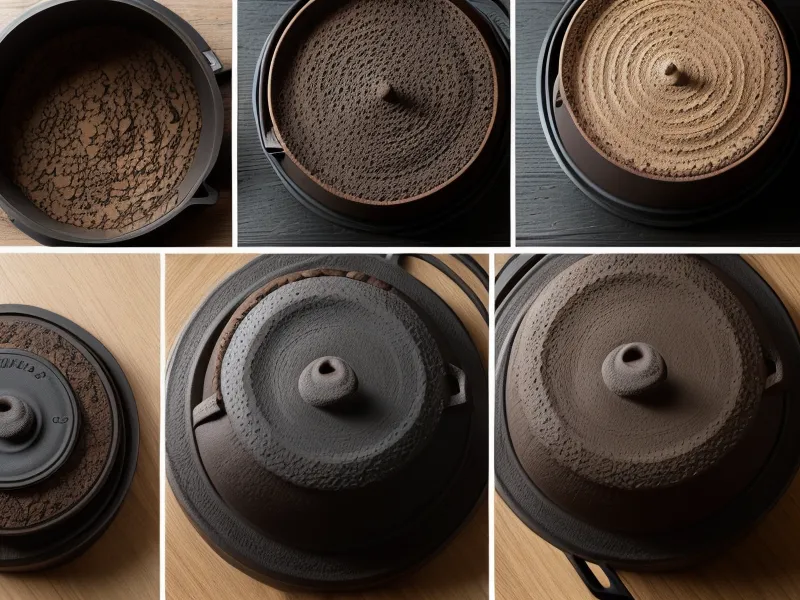
Run a cast-iron pan next to a clay one and the real difference isn't how hot each gets — it's how long each one stays hot. The Magnifique Claypot Oven is kaolin clay, a completely different material from cast iron or the All-Clad tri-ply I reach for on the stovetop. Heavy cast iron holds more thermal mass, and that's what drives the first explosive burst of oven spring. Thinner walls, like the claypot's, cool faster, and crumb actually finishes stabilizing as a loaf cools rather than while it's still baking. Leave a loaf sitting in the Challenger too long after the lid comes off and the base stays hot enough to over-bake the bottom crust.
Bottom crust really comes down to what the dough is resting on. A thick, flat base can heat unevenly and leave you with a pale, dense underside instead of a hollow-sounding knock when you tap it — true of a bread pan, and just as true of whatever sits under a tray of cookies.
Who Should Buy the Challenger — and Who Shouldn't
Bake sourdough at least twice a week and don't mind the forearm work, and the Challenger sits close to the ceiling of what a home oven can produce. The crust texture is genuinely hard to get from anything thinner. The handles are wide enough to grab with bulky mitts too, which sounds minor until you've used a pan where the handles were an afterthought.
Casual weekend baker, or tight on storage? The Magnifique claypot is the friendlier tool by a wide margin. It's light enough to lift one-handed, and it doubles as a slow cooker for stews between bakes, which the Challenger flatly cannot do. You give up some of that raw thermal push — the crust won't be quite as dramatic — but for most home kitchens that's a small trade for a pan you'll actually pull out on a regular weeknight, not just for company. If you're newer to this, you don't need to drop $300 on a single-purpose iron slab while you're still finding your hydration levels; that's really a cook-type-fit question more than a spec-sheet one, matching the pan to how often you bake rather than which one wins on paper.
Building Dough Strong Enough to Hold the Steam
None of this works without dough that can hold up under steam pressure. A weak, under-developed dough collapses in the Challenger just as fast as it does in a cheap Dutch oven — the pan doesn't fix gluten structure, it just shows off whatever structure was already there. I went through a Hamilton Beach stand mixer that overheated and tripped its own motor protector halfway through an hour-long sourdough knead, which is how I ended up on a higher-torque machine instead.
A KitchenAid Pro 5 Plus — the bowl-lift model, not the tilt-head — has enough torque to get a stiff dough to full development without stalling out, and I've written more about that machine specifically in my guide to stand mixers for sourdough and heavy doughs. Dough development really belongs to that piece more than this one; what matters here is that the pan and the mixer are solving two different halves of the same problem. A friend from my kitchen co-op, Brennan Strickland, let me run his flour-mill attachment for a few months before I bought my own, and freshly milled flour behaves differently under that much trapped steam than anything scooped from a bag.
The Buy-or-Skip Call
So, the actual call. Don't start here if you're new to sourdough or bake it occasionally — a Magnifique Claypot or a basic Dutch oven gets you most of the crust without asking your kitchen to reorganize around a single pan. Once your hydration is dialed in and you're chasing the kind of blistered, singing crust a thinner pan can't produce, the Challenger Breadware earns its counter space and the two-handed lift. Just settle where it's going to live before it arrives. That decision matters more than anything printed on the box.