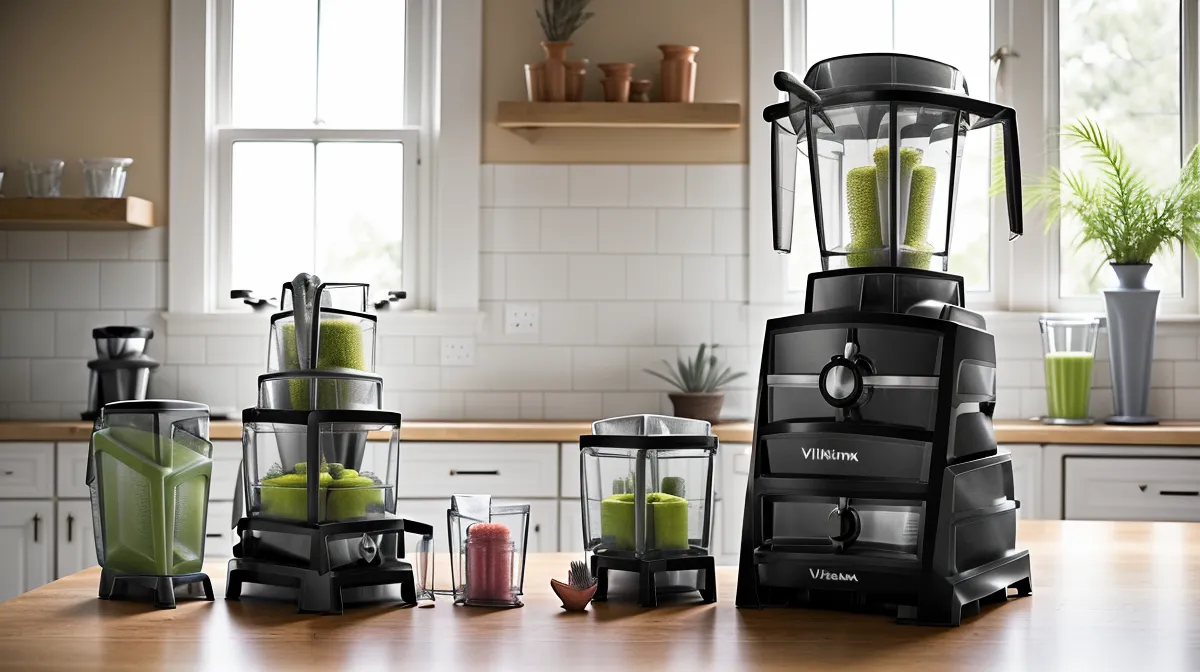
Flour dust is already drifting onto my forearms before I've decided whether this batch of hard red winter wheat needs a second pulse. The Vitamix Ascent on my counter is mid-grind, and after six years of running premium kitchen gear through its paces in this house, the question I keep circling back to isn't whether a blender can mill flour — it can, easily — it's whether the specialized 32-ounce dry grains container is a baking tool worth real cabinet space, or just another accessory designed to get a home-milling convert to open their wallet twice.
Whole wheat flour that's been sitting in a paper bag on a grocery shelf for months has a faint bitter edge to it once you get your nose close, the oils in the germ starting to turn. The wheat berries I buy in bulk from a shop in the Atwood Avenue neighborhood don't have that problem, because they go from bag to blender within days of landing on my counter. That's the entire case for milling your own whole wheat flour, and it's also why people keep asking me which container actually does the job better: the dedicated dry jar Vitamix sells as an add-on, or the standard wet container that ships with the machine.
Grinding Grain Without Burning Out the Motor
Most blender blades are cut to pull ingredients down into a vortex, which is exactly what you want for a smoothie and exactly wrong for a dry powder. The dry grains container swaps in laser-cut stainless steel blades angled to push flour up and away from the base instead, so it doesn't pack into the corners and choke the motor. At a blade tip speed Vitamix rates around 240 mph, that airflow is doing real work — it's less about grinding harder and more about not trapping the grain in one spot long enough to overheat it.
Hard red winter wheat. The backbone of a good bread flour, usually running 12 to 15 percent protein, and tough enough that a standard blender motor sounds like it's pleading for mercy halfway through a batch of hard red winter wheat. I fill the 32-ounce jar about halfway — go past that and you end up with a solid brick of grain instead of flour — and the whole kitchen fills with a mechanical howl for about sixty seconds before it settles into something closer to a hum.
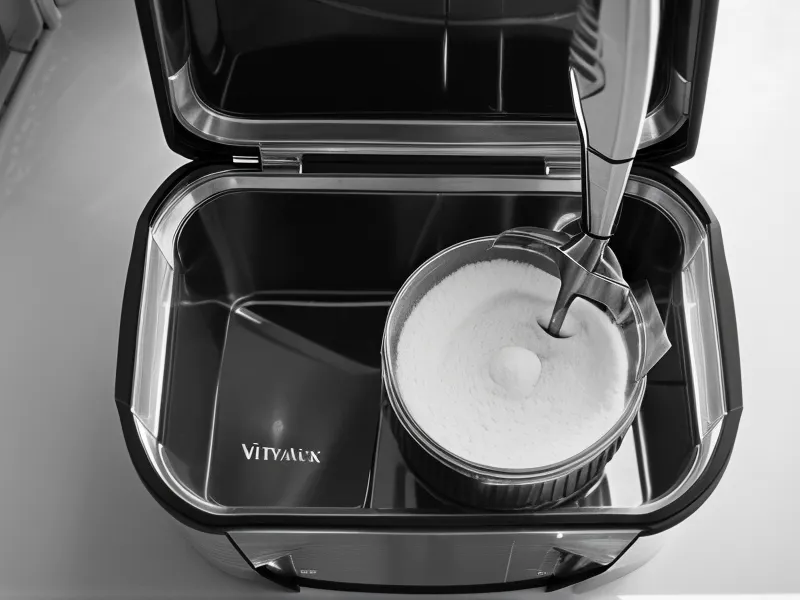
That heat is the part nobody warns you about. The bottom of the jar gets hot enough that touching it the first time feels alarming, like something under there has melted (nothing has melted; it's friction, not failure). Some of that heat actually helps release the grain's aromatic oils, though you have to watch it, because push the flour too hot for too long and you start cooking the gluten before it ever reaches a mixing bowl. It reminds me of trusting the wireless probe thermometer that pings from the living room once a pork shoulder clears its target temperature without me ever cracking the oven door, some kitchen tools earn the right to be left alone mid-process, and a well-designed milling jar is edging into that category.
Wet Jar or Dry Jar: Which Actually Mills Better Flour?
Here's where I part ways with the marketing copy. Side-by-side testing settled the question for me faster than I expected: I ran the dedicated dry container one weekend and, purely out of stubbornness, the standard 64-ounce wet container the next. Conventional wisdom says the wet jar will pit and cloud the plastic and grind less finely. The clouding part is true, mine now looks like it's been through a sandstorm, but the flour it produced was, if anything, better suited to my Tartine-style loaves. That's not a small claim to make against a specialized accessory, and it surprised me too.
The wet container's downward vortex keeps the grain in contact with the blades longer, which means a silkier flour, at the cost of running hotter and needing more careful pulsing to avoid clumps. The dry container, pushing everything upward, throws off a fine dust that escapes through the lid vents — I've finished a milling session with a dusting of wheat flour on both forearms that smelled incredible but represented product I'd lost to the air. A friend of mine, who spends her summers tending a raised-bed vegetable garden with twelve varieties of tomato, told me I was overthinking a bag of grain the same way she overthinks soil pH, and she's not entirely wrong.
None of this is only about flour texture, though. When I compare the dial on the Vitamix to how other high-end blenders handle sustained heat, the Ascent dissipates it noticeably better once it's paired with the right jar. How different motors hold up across jar sizes and blending programs is a bigger comparison than I can do justice to here, and how well the Ascent itself holds up after years of near-daily use is really its own separate question — but the short version is that container choice affects your machine's longevity, not just the flour sitting in front of you right now.
When the Extra Container Earns Its Cabinet Space
Last August, during a stretch of Madison humidity that made everything in the kitchen feel slightly damp, I tried milling cornmeal for a Sunday polenta side. The dry container kept the corn bouncy and loose; the wet one gummed up almost immediately, forming a wall of damp meal at the base that was miserable to scrape out from under the blades. That's the exact scenario where the upward-thrust design stops being a marketing claim and starts saving your Sunday.
Who actually needs this. Matching the right container to your batch size is its own small rabbit hole I won't fully unpack here, but under-filling or overfilling the 32-ounce jar is the fastest way to ruin a session either way. If you're milling weekly — buying wheat berries by the 25-pound bag and baking two or three loaves — the dry container protects your main jar and keeps the motor from straining under packed, damp flour. The price-performance gap on a single-use accessory like this is smaller than the one I obsess over when I'm comparing stainless cookware, but it isn't nothing, and a casual baker milling once a month is paying for a problem they don't have yet.
It earns its keep beyond wheat, too. Granulated sugar turns into powdered sugar in about twenty seconds flat, which has rescued more than one frosting emergency, and spices grind just as easily, though cumin, once it's been through there, never fully leaves — the self-clean cycle with lemon and soap gets the scent down to faint and no further. What the KitchenAid does to that same milled flour once it hits the dough hook is its own separate conversation, though I'll say this much: nudging that speed dial up a notch under a floury thumb still has a small, satisfying click of resistance in it, the kind of mechanical honesty that's rare in appliances this heavily used.
So, Is the Dry Grains Container Worth Buying?
Buy it if you're committed enough to fresh flour that milling has become a weekly habit rather than a novelty — the jar pays for its cabinet space by sparing your main container and your motor. Skip it if you're still testing whether home milling is even something you'll stick with; use the wet container you already own first. You might decide the noise and the dust aren't worth it, in which case you've saved the storage space and the extra purchase entirely.
My sourdough tastes different since I started milling my own flour, deeper and nuttier, the bran never having sat in a warehouse long enough to dry out and go flat. I will say the one piece of this whole bread project that didn't work out was a Lodge Dutch oven I bought specifically for the ears it produces — it gave me a gorgeous spring every time, but the thick flat base left the bottom crust unevenly browned no matter how I adjusted the rack. Gear doesn't always deliver evenly across every part of the job, which is really the whole point of testing it yourself instead of trusting the box. (There's a dent in my favorite All-Clad lid from the time I dropped it on this same floor, and I still haven't replaced it.) Whether it's the dry grains container or the precise heat of my copper core pans, the goal is always the same: control over what actually ends up on the plate.